
Bathroom Remodel in Lake Tapps, WA
Tubs, showers, tile, vanities, and the plumbing behind the wall, done right so the room holds up under daily use.
Bathroom work starts by pulling the old tub or shower and tile out and looking at what is underneath, since that subfloor and the wall behind the tile tell you more than the fixtures ever will. If there has been a slow leak for years, this is where it shows up, soft spots in the subfloor or dark staining on the framing. Plumbing gets moved or reworked next if the layout is changing, then waterproofing goes on before a single tile gets set.
The waterproofing step is where most bathroom failures start. Skip it, or use the wrong membrane behind a tiled shower, and water works its way through the grout lines over time and rots the framing behind it, work that stays invisible until the wall starts to feel soft or a smell shows up that will not go away. A fan that is not vented straight outside causes the same kind of slow damage from moisture that has nowhere to go.
A homeowner should ask what waterproofing system is going behind the tile, whether the subfloor gets checked before new flooring goes down, and where the exhaust fan actually vents to. Those three answers tell you more about how the bathroom will hold up than the tile pattern does.
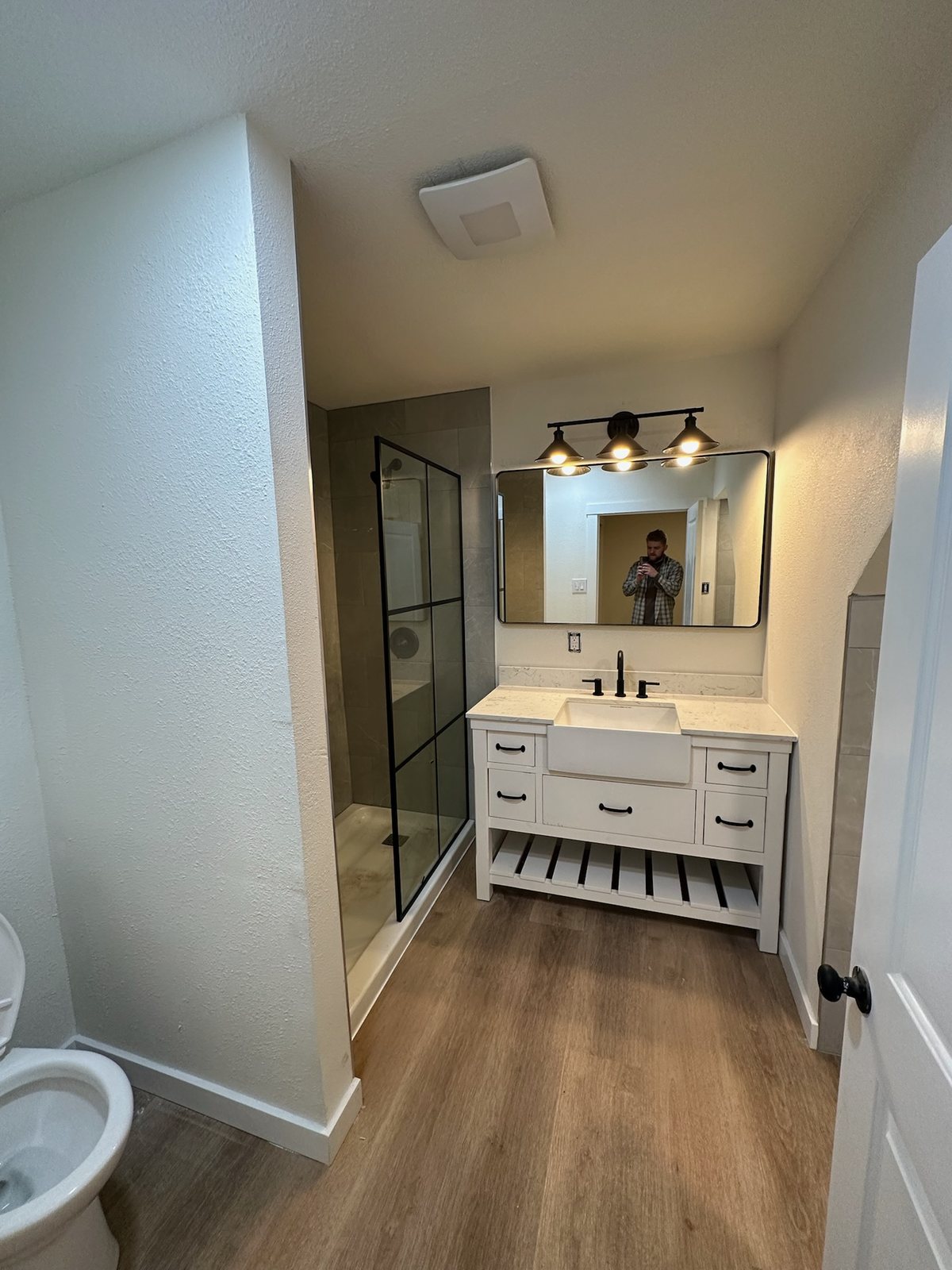
How it runs.
- Walkthrough and plan We look at the current layout and talk through what is changing and what stays.
- Demo Old fixtures, tile, and flooring come out.
- Plumbing rework Supply and drain lines get moved or replaced as needed for the new layout.
- Waterproofing A proper membrane goes in behind any tiled wet area before tile is set.
- Tile floor and walls Tile goes in once waterproofing has had time to cure.
- Vanity, fixtures, and fan Vanity, toilet, fixtures, and the exhaust fan get set and connected.
Questions about
bathroom remodels.
How do you keep water from getting behind the tile?
A waterproofing membrane goes over the wall board before any tile is set, and it is what actually keeps water out, not the tile or grout itself. We check that it has cured properly before moving on to tile.
Can you convert a bathtub to a walk-in shower?
Yes, that usually means moving the drain slightly and reworking the framing for a curb or curbless entry. We will look at your plumbing and floor structure to see what the layout allows.
What happens if the subfloor is soft once you open it up?
We stop and show you the damage before deciding how much needs to be replaced. It is more common in older homes and in bathrooms that have had a slow leak nobody noticed.
Do I need a permit for a bathroom remodel?
Any job that moves plumbing or touches electrical usually needs a permit, and we handle that as part of the job. A cosmetic update with no layout changes may not need one, and we can tell you which applies to your project.
Other things we do
Talk to us about your project.
Call (253) 525-4641 or send the form on the home page with what you have in mind and roughly where you are.
Request a Quote